Immediate implant placement, front tooth
Teeth 12 and 11 · upper jaw
Kiel · Eckernförde · metal-free since 1998
Zirconia implants are biocompatible, electrically neutral and look like natural tooth roots. We have been placing them since 1998 – more than 2,000 to date – and have trained dentists in over 30 countries in the technique.
Why ceramic
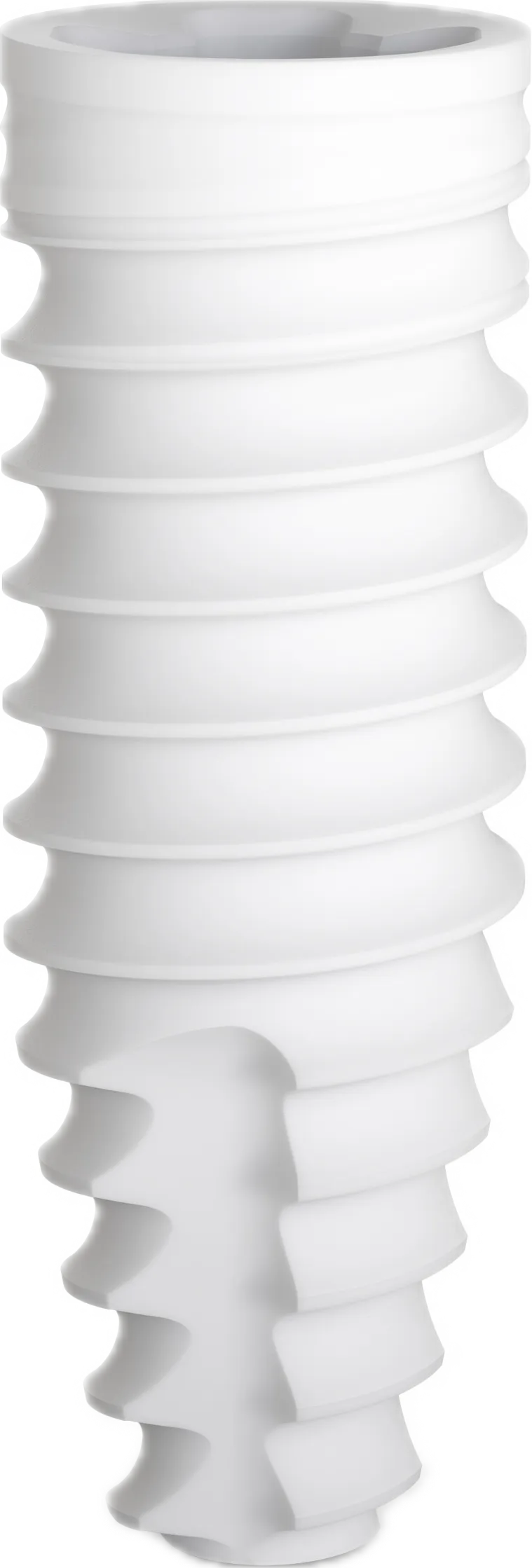
Zirconia is a high-performance ceramic – white, corrosion-free, with no release of ions. The gum attaches to it, plaque adheres less than to titanium, and with thin gum tissue nothing grey shows through. We discuss openly what the research says and where titanium remains the better choice in individual cases.
No metal ions, no galvanic currents in the mouth – even next to existing gold or titanium. For people with intolerances, chronic conditions or the wish for a metal-free body, it is the consistent solution.
Especially with front teeth, the margin is what matters: with ceramic there is no dark shadow at the gum line. All-ceramic crowns from our own laboratory carry the result through to the biting surface.
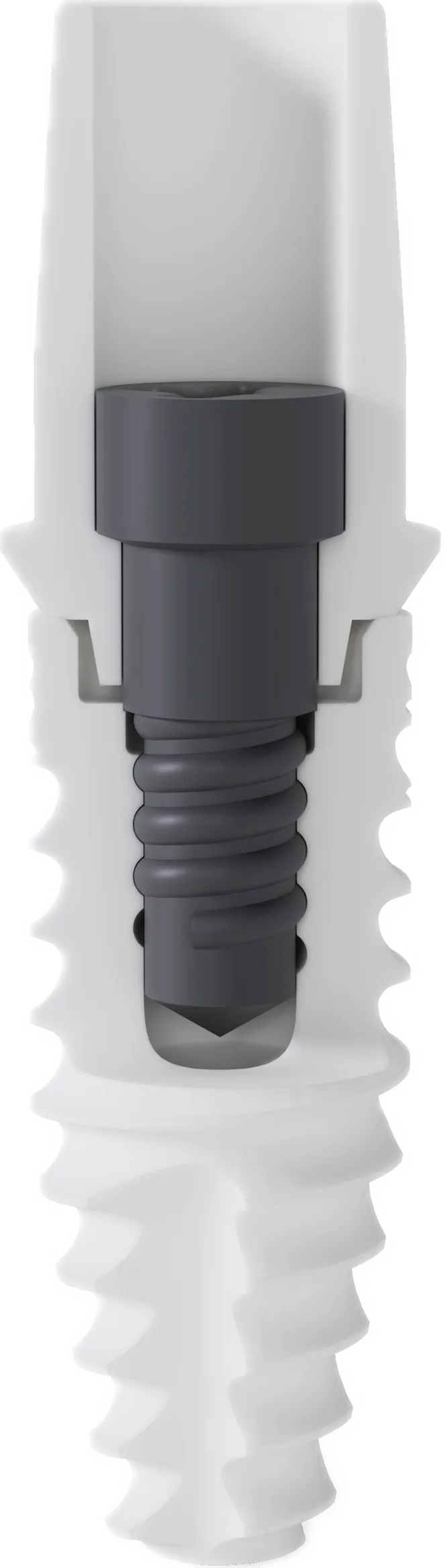
The S3 guideline “Ceramic implants” of the German societies DGI and DGZMK classifies modern zirconia implants as a reliable alternative. We mainly work with two-piece systems according to our SBLC concept – and with one-piece systems where the starting conditions allow. We will tell you openly which system we use.
Ceramic or titanium?
How it is built
Process
In many cases we remove the tooth, place the ceramic implant and fit a temporary restoration straight away. You leave the practice with a tooth, not a gap.
30 to 60 minutes, 3D X-ray of the jaws (CBCT), digital jaw scan as a planning model, findings. An initial assessment on the same day, and your written treatment and cost plan a few days later – without pressure.
TAG 1Vitamin D and micronutrient status, removal of metal or inflamed teeth where needed. This creates good conditions for bone and immune system.
2–4 WOCHENGentle implantation technique according to our SBLC concept, supported where needed by PRGF from your own blood. Where possible, immediate restoration with a long-term temporary from our own laboratory.
1 TERMINAfter healing, the all-ceramic crown or bridge. Then follow-up care at regular intervals – we remain your point of contact.
NACH 3–6 MONATENWhy choose us
An implant is a screw in the bone. What you see, feel and use every day is the crown on top of it. That is why every plan with us begins at the end: with the finished tooth. Only then do we decide where the implant has to sit for it.
We first design the tooth that should be there at the end: shape, colour, position, gum line. The position of the implant follows from this design – not the other way round. An implant that sits well in the bone but in the wrong place for the crown is not a good implant to us.
Planning, implant placement, temporary, final crown and aftercare: with us, the same team does all of it – at both locations, with the laboratory in the same building. There is no handover in which information gets lost, and no moment in which two practices wonder who is responsible for a problem.
We have been placing implants for more than 30 years, ceramic implants since 1998 – more than 2,000 of them. Plus bone augmentation, immediate implant placement and the removal of titanium implants. What Dr. Lüttmann has been teaching dentists in over 30 countries for years, he applies every day in Kiel and Eckernförde. With his Master in Periodontology and Implant Therapy, Jan-Ole Lüttmann adds the expertise for the tissue that carries every implant.
Patients often ask us how many implants we place per year. The honest answer: enough for it to be routine – and not so many that your case becomes one among many. What decides the result is something else: the planning, the technique and the quality of the crown you will live with for the next twenty years.
“We don’t measure ourselves by how many implants we place. But by how many of our patients have forgotten after ten years that they have one.”
Costs
These figures are guide values from our practice. Your personal treatment and cost plan is drawn up after the initial consultation and is binding.
Dr. Ralf Lüttmann
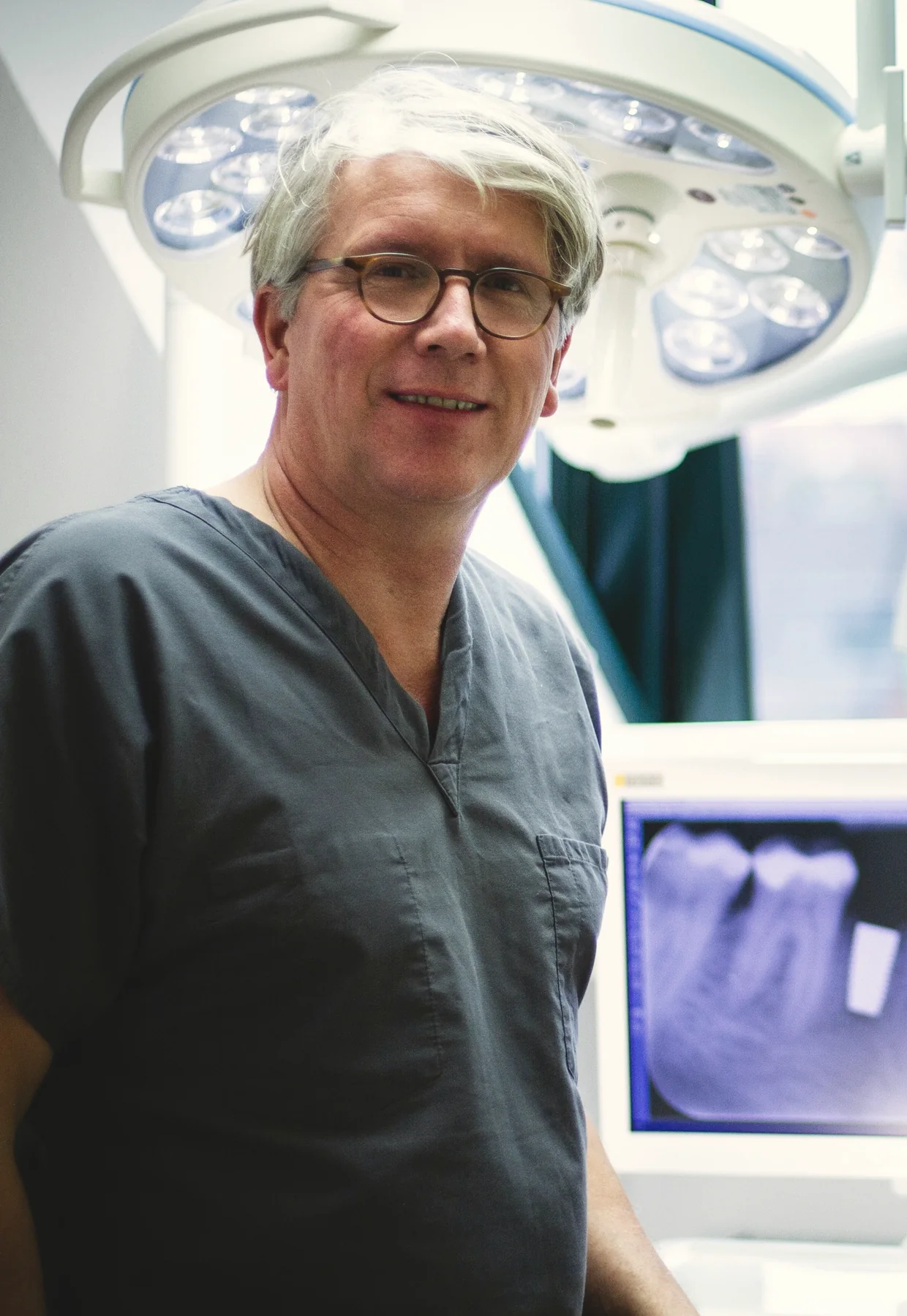
Dentist since 1991, implant surgery since 1993, metal-free since 1998. Dr. Ralf Lüttmann accompanied the development of two-piece ceramic implants as a clinical user, was a guest lecturer in Santiago de Compostela and Madrid and has trained colleagues in more than 30 countries. At his side: Jan-Ole Lüttmann, M.Sc., partner in the practice and equally experienced in ceramic implantology.
Patient stories
For patients from further away
We combine diagnostics, planning and treatment so that you usually need only two to three visits. Kiel is 1 hour from Hamburg and 1.5 hours from the Danish border. Consultation and treatment in German or English.
Frequently asked questions
In studies over 5 to 10 years, modern zirconia implants show survival rates comparable with titanium. The S3 guideline of DGI and DGZMK classifies one-piece systems as a safe alternative; for two-piece systems the data are more recent. What matters are the implant system, planning and aftercare – our focus since 1998.
In many cases, yes. We examine the bone and surrounding tissue on a 3D X-ray (CBCT) and discuss whether a change makes medical sense and how we can carry it out gently.
Zirconia releases no metal ions and is electrically neutral. It is therefore particularly worth considering in cases of proven metal intolerance or if you want a metal-free restoration. Whether it is right for you, we clarify at the initial consultation.
If conditions are stable, we place the implant directly after the tooth is removed and, where possible, fit a fixed temporary on the same day. The final crown follows after healing.
German private insurers and the civil-servant allowance (Beihilfe) usually reimburse; patients with German statutory health insurance receive the fixed subsidy (Festzuschuss). We prepare the treatment and cost plan so that you can submit it in advance.
Initial consultation
We will get back to you by the next working day at the latest with appointment suggestions for Kiel or Eckernförde.