DE·EN·DA
Consultation
Home/Why ceramic/Ceramic or titanium

Ceramic or titanium?
A comparison without the dogma.

We have placed both – titanium since 1993, ceramic since 1998. That is why we can tell you where zirconia has a clear advantage, where the two are on a par, and in which rare cases titanium remains the better choice.

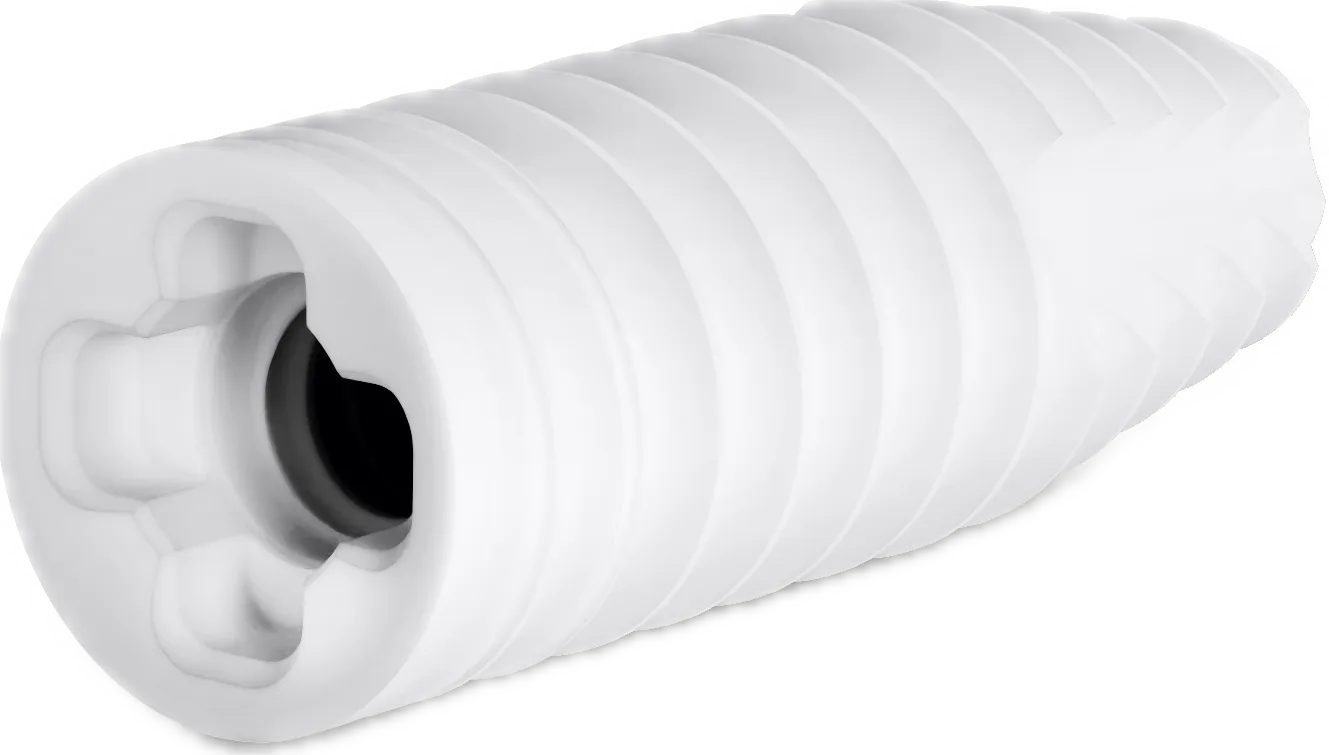
Keramikimplantat aus Zirkonoxid mit Blick in die Innenverbindung
Zirconia
White, metal-free, electrically neutral
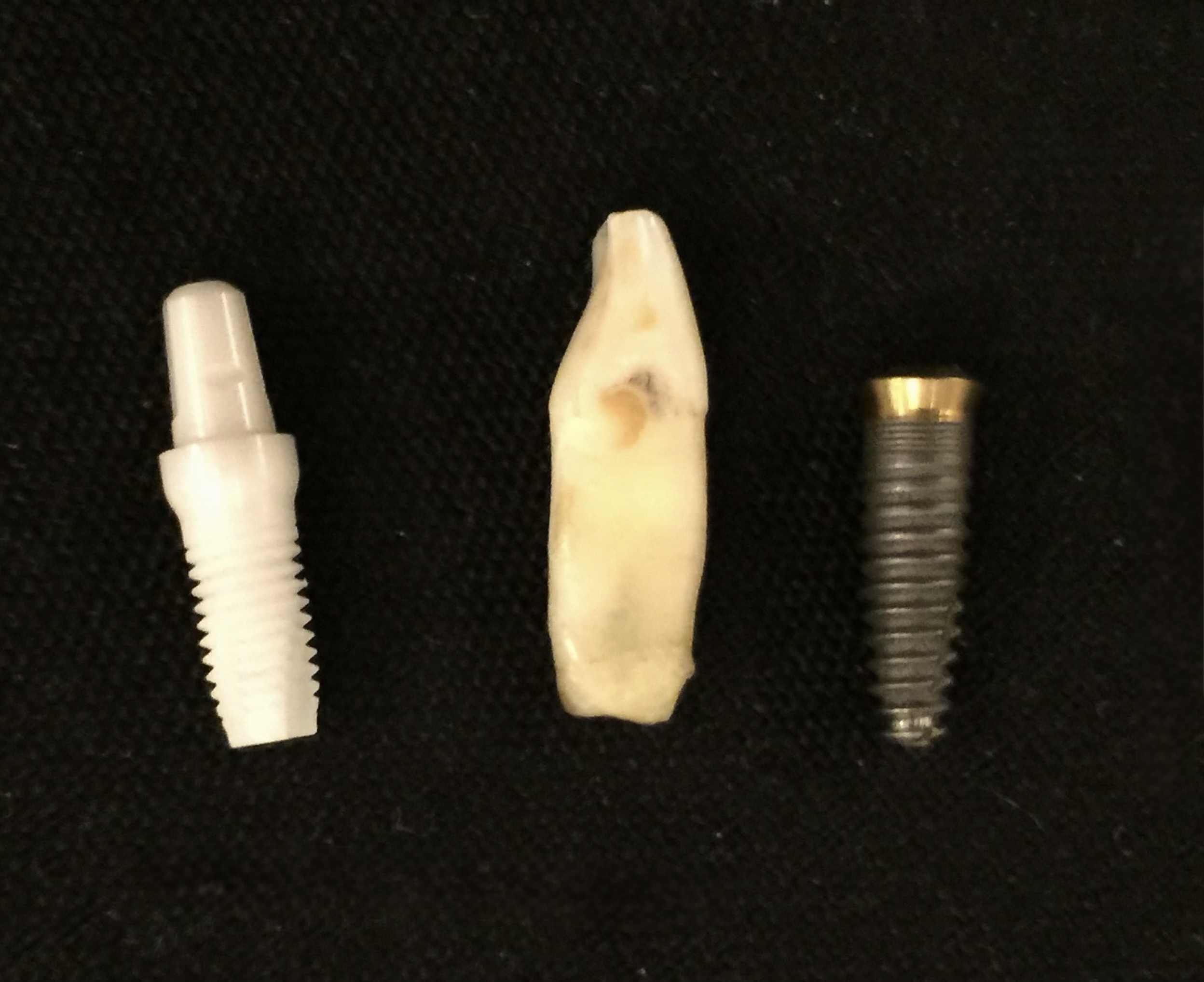
Keramikimplantat, natürlicher Zahn und Titanimplantat nebeneinander
Ceramic · Tooth · Titanium
Side by side: ceramic implant, natural tooth, titanium implant
Vorteil Keramik

Biology and aesthetics

No ion release, no corrosion, no grey margin. Less plaque accumulation and gum tissue that attaches directly.

Gleichauf

Durability and healing

Over 5 to 10 years, modern zirconia systems achieve survival rates comparable with titanium. For periods beyond 15 years, titanium has the longer body of data.

Vorteil Titan

Special cases and angulation

For extreme angles, very narrow diameters or certain large-scale restorations, the titanium range is wider. We will tell you if this applies to you.

Point by point

Thirteen criteria that matter to you as a patient.

Criterion
Ceramic (zirconia)
Titanium
Assessment
Material
High-performance ceramic, no metal content
Titanium alloy (usually grade 4 or Ti-6Al-4V with aluminium and vanadium)
Ceramic
Colour and aesthetics
Tooth-coloured white – no show-through, even with thin gums
Grey; visible margin with gum recession or thin mucosa
Ceramic
Metal ions and corrosion
No ion release, no corrosion
Titanium particles and ions detectable in the surrounding tissue
Ceramic
Electrical conductivity
Insulator – no galvanic currents next to gold, amalgam or other titanium
Conductor – potential differences with other metals possible
Ceramic
Intolerance and allergy
No known sensitisation to zirconia
Rare, but documented; particle reactions vary between individuals
Ceramic
Plaque and gums
Lower bacterial adhesion, good soft-tissue attachment
Greater plaque accumulation on exposed surfaces
Ceramic
Peri-implantitis risk
Tends to be lower, according to current studies
Long-term data show relevant rates, particularly in high-risk patients
Ceramic
Healing (osseointegration)
Comparable with titanium; requires a dedicated protocol
Very well documented, established protocols
On a par
Survival rate 5–10 years
Comparable – longest documented for one-piece systems
Very high, documented over decades
On a par
Long-term data beyond 15 years
Still limited – ceramic is the younger technology
Extensive
Titanium
Range and special designs
Good selection, but fewer angled and mini variants
Very wide range, many special designs
Titanium
Magnetic resonance imaging (MRI)
Hardly any artefacts, no heating
Considerably larger artefacts that can obscure the surrounding area
Ceramic
3D X-ray of the jaws (CBCT)
Considerably more scatter artefacts – the interface between implant and bone is hard to assess
Fewer artefacts; the bone around the implant can be assessed more reliably
Titanium

Assessment based on the S3 guideline “Ceramic implants” of the German societies DGI/DGZMK (as of 12/2022) and current review articles. The assessment reflects our professional judgement and does not replace individual consultation.

What the research says

Since 2022, ceramic implants have been covered by a clinical guideline.

The German Society of Implantology (DGI) and the DGZMK have evaluated zirconia implants in an S3 guideline – the highest level of evidence in the German system. That is the difference between conviction and evidence.

Read the guideline (AWMF 083-039)
S3 guideline
Ceramic implants – DGI, DGZMK et al., 2022, valid until 2027
Assesses zirconia implants as an alternative to titanium. One-piece systems are considered safe (over 97 % after 7 years); for two-piece systems the data are more recent – the decisive factor here is the connection between implant and abutment.
Systematic review
Roehling et al., Clinical Oral Implants Research, 2018 – Survival rates of zirconia implants
Meta-analysis of 18 clinical studies: 98.3 % survival after one year, 97.2 % after two years. One-piece zirconia implants are thus in the range of titanium.
Clinical study
Degidi et al., Journal of Periodontology, 2006 – Gums around zirconia and titanium
Tissue samples after six months of healing: around zirconia, markedly fewer inflammatory cells and a calmer vascular response than around titanium. A further human study (J Periodontol 2004) found around one third fewer bacteria on zirconia – 12.1 % versus 19.3 % of the surface colonised.
Our own experience
More than 2,000 ceramic implants since 1998 in Kiel and Eckernförde
Experience from 28 years of ceramic implantology. Our observation: gums attach more firmly to ceramic and bleed less. That is why we use exclusively individually made ceramic abutments on titanium implants, too.

To be honest

When we would still advise you to choose titanium.

Rarely – but there are situations in which titanium is the better choice. If so, we will tell you openly. And even then, we make exclusively individual ceramic abutments – so that the benefits of ceramic are retained where it meets the gums.

01
Extreme axial inclination
When the implant and crown have to sit at a very steep angle to each other and bone augmentation is not wanted.
02
Very narrow jaw ridge without augmentation
For diameters below 3.5 mm, there are so far only a few ceramic systems with robust data.
03
An existing titanium restoration that works well
We do not replace a stable, non-irritated titanium implant without a medical reason. We check – and tell you if it can stay.
04
Certain large-scale restorations
For some screw-retained full-arch constructions, the range of titanium components is wider. We usually find a metal-free solution – but not always.

Already have titanium?

Switching from titanium to ceramic – when it makes sense and how it works.

In cases of peri-implantitis, proven intolerance or the wish for a metal-free body, we remove titanium implants in a bone-preserving way using special instruments, supported by ultrasound where needed. We then clean the bone bed and – if the situation allows – place a ceramic implant in the same session. Whether this is possible in your case, we clarify beforehand at the initial consultation with a clinical examination and a 3D X-ray of the jaws (CBCT).

Photo: 3D X-ray (CBCT) with titanium implant, screen in the consultation room

Common questions about the comparison

What patients ask us about it.

Isn’t ceramic brittle and more likely to break?

Zirconia is the toughest oxide ceramic and is also used for hip joints. Early ceramic implants of the 2000s had fracture problems; modern systems – one-piece and two-piece – with an optimised design achieve values in load tests that are comparable with titanium.

Then why don’t all dentists use ceramic?

Ceramic requires its own surgical protocol – titanium routines cannot simply be transferred. Those who rarely work with it stick to what they know. Since 1998 we have done nothing else, and we have trained more than 2,000 colleagues in it.

Do I need a titanium intolerance test?

A titanium stimulation test can provide indications, but it is not the only basis for a decision. If you opt for ceramic, you do not need it; if you are undecided between the two, it can help you weigh things up. We discuss this at the initial consultation.

Does ceramic cost more than titanium?

The ceramic implant itself costs somewhat more than a titanium implant – with us, the difference is around €400 per implant. You receive the individually made ceramic abutment from us in both cases. The exact ranges are on our costs page.

Can I have an MRI scan with ceramic implants?

Yes. Zirconia causes hardly any artefacts in MRI and does not heat up. Still, briefly let the radiology team know about your implants.

In 60 minutes, we will work out which material suits you.

Initial consultation with 3D X-ray, findings and a written cost plan – in Kiel or Eckernförde.