The path
Five steps. Each with a time frame, so you can plan.
Initial consultation and diagnostics
We listen first: what bothers you, what you would like, what previous illnesses and intolerances there are. Then a 3D X-ray of the jaws (CBCT) and an intraoral scan – a digital 3D impression of your jaws. Together they form a precise planning model, which we use to explain your situation clearly. You receive an initial assessment on the same day and the written treatment and cost plan within a few days.
- Low-dose 3D X-ray of the jaws (CBCT) instead of conventional X-rays
- Intraoral scan as a digital planning model – no impression material
- Advice on ceramic, titanium and alternatives (bridge, saving the tooth)
Preparing the body
Well-nourished bone is an important prerequisite for healing. We test vitamin D3 and relevant micronutrients, correct deficiencies and, where needed, remove metals or chronically inflamed teeth beforehand. If you are travelling from far away, you can have the blood tests done by your GP.
- Vitamin D and micronutrient status
- Gentle removal of amalgam or metal, if desired
- Professional teeth cleaning before the procedure
Implant placement – immediately, where possible
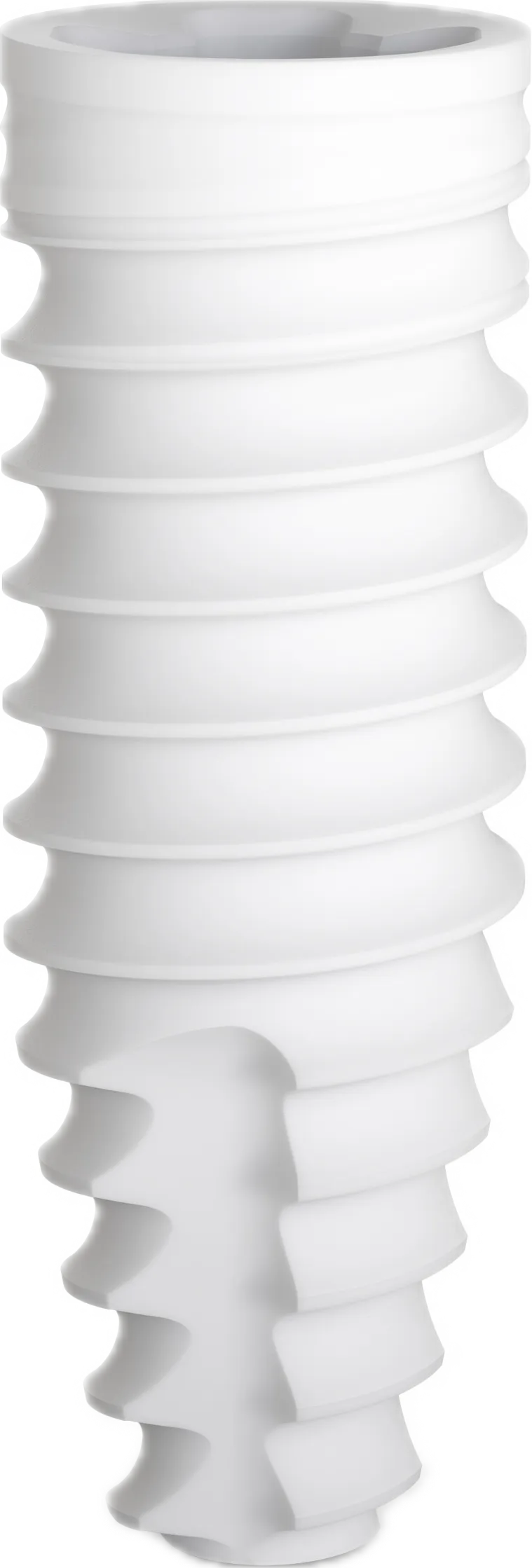
If the bone is stable, we remove the tooth, place the ceramic implant directly into the fresh socket and – where possible – fit a fixed long-term temporary from our laboratory. You then go home with a tooth. Where needed, we support healing with PRGF from your own blood.
- Gentle implantation technique exactly where the bone is optimal – planned from the 3D X-ray and intraoral scan, without extensive opening of the gums
- Fixed temporary on the same day, where possible – not for chewing, but for smiling
- If there is not enough bone: augmentation, implant placement after 3–4 months
Healing and check-ups
The zirconia bonds with the bone and the gums settle around it. During this time we see you briefly two or three times – if you travel from afar, check-ups can be coordinated with your local dentist. Significant discomfort is the exception; many patients return to their everyday routine the next day.
- Check-ups after 1 week, 4 weeks and before the final restoration
- Reachable via WhatsApp if you have questions
The final crown
After healing, we scan the implant and make the all-ceramic crown or bridge in our in-house master dental laboratory – colour, shape and surface matched to your neighbouring teeth. It is fitted at the second appointment. After that: follow-up care every six months.
- All-ceramic, metal-free right up to the chewing surface
- Try-in and fitting usually within one week
- Follow-up care and professional cleaning at regular intervals